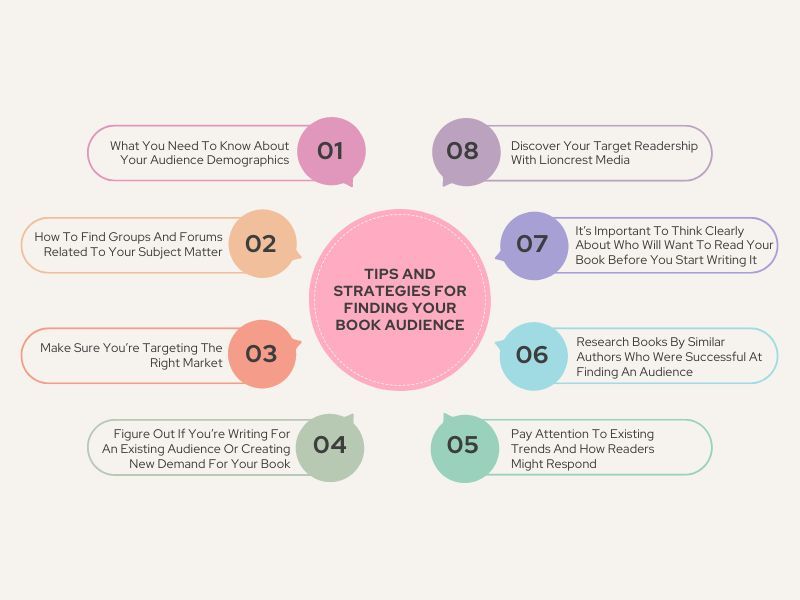

What You Need To Know About Your Audience Demographics
Demographics are characteristics used to understand and market to your audience. They reveal information about your target market, the type of person interested in reading your book. This includes age, gender, race/ethnicity, and location. For example, a weight loss book would likely appeal to women aged 25-50 in urban areas with gym access. Demographics also provide insight into competitors audiences and their marketing strategies.
How To Find Groups And Forums Related To Your Subject Matter
Use Google to search for groups and forums matching your subject. Review social media posts, particularly those about local interests like writers groups. Check paid membership platforms like LinkedIn for networking opportunities. Visit your local library, which often hosts book discussions and events. Librarians may know relevant online communities. Ask friends and family about groups they have encountered.
Look for opportunities to network in person and online
Attend local book clubs or library events to meet readers face-to-face. Consider organizing events with other authors in your genre. Online, explore Twitter and Facebook groups dedicated to writing and publishing tips. These communities, whether large or small, connect people sharing common interests and publishing industry experience. LinkedIn also serves as an excellent professional networking platform.
Make Sure You Are Targeting The Right Market
Ensure your potential readers are the right audience. Research who will most benefit from your book and why. Understand their primary challenges and how your work addresses them. Without proper targeting, marketing efforts prove ineffective and sales suffer.
Figure Out If You Are Writing For An Existing Audience Or Creating New Demand
Two audience types exist: established readers and new markets. For existing audiences, determine their size and characteristics. When targeting new readers, focus on creating demand among those unfamiliar with your topic.
Pay Attention To Existing Trends And How Readers Might Respond
Monitor which book types sell currently, fiction or nonfiction, specific subgenres. Track popular genres losing momentum and emerging trends. Research well-known authors within niches and identify those who successfully expanded beyond traditional audiences.
Research Books By Similar Authors Who Were Successful At Finding An Audience
Examine successful similar authors works and promotion strategies. Review Amazon and Goodreads ratings. Check bestseller rankings and sales trajectories. Read authors blog posts about their marketing approaches for valuable insights.
Think Clearly About Who Will Want To Read Your Book Before You Start Writing It
Identify your audience before writing begins. Knowing your readers enables writing tailored to their interests and communication style. Consider who would appreciate your book and their motivations. Equally important: understand who will not find value in your work.
Discover Your Target Readership With LionCrest Media
Finding an audience requires patience. Success does not happen overnight. Discouragement may occur, but persistence matters. LionCrest Media assists authors with publication and marketing, offering expert guidance and programs for audience development and book promotion strategies.