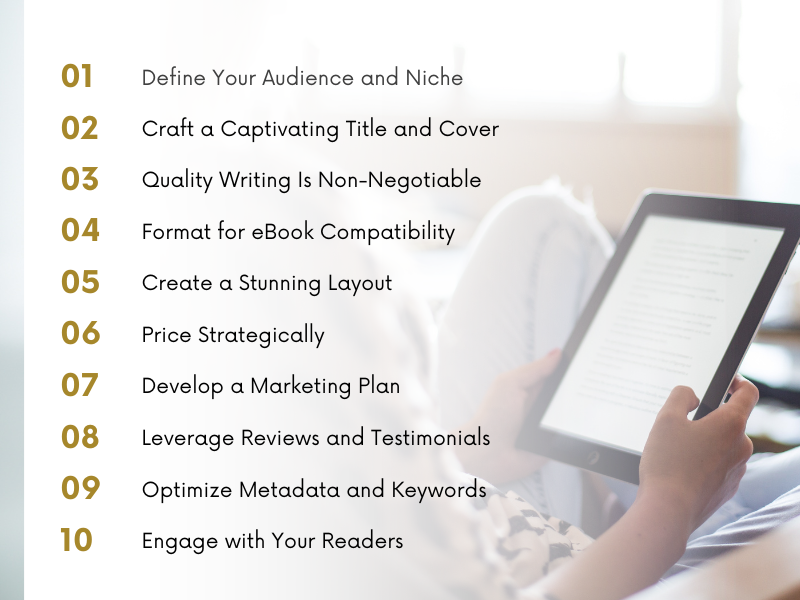

In the age of digital media, publishing your first eBook has never been more accessible and rewarding. No matter if you dream of becoming an author, have ample experience in writing, or simply have a story itching to be told, self-publishing an eBook presents an incredible chance to showcase your work to the world.
However, the process can seem daunting for beginners. Fret not; in this comprehensive guide, we will walk you through ten invaluable tips to help you publish your first eBook successfully.
1. Define Your Audience and Niche
Before you even start writing, it is crucial to understand who your target audience is and what niche or genre your eBook will fall into. This clarity will guide your content, style, and marketing efforts. Research your potential readers preferences and needs to create a compelling eBook that resonates with them.
2. Craft a Captivating Title and Cover
Your eBooks title and cover are the first things potential readers will see, so make them count. A compelling title and a professional-looking cover design can significantly impact your eBooks success. Consider hiring a designer or using eBook cover design tools to ensure a visually appealing cover.
3. Quality Writing Is Non-Negotiable
Your eBooks content must be well-written, error-free, and engaging. Invest time proofreading and editing your work, or hire a professional editor if needed. Quality writing ensures that readers not only finish your eBook but also leave positive reviews and recommend it to others.
4. Format for eBook Compatibility
Specific formats are required by various eBook platforms. Popular formats include EPUB and MOBI. Ensure your eBook is correctly formatted for compatibility with major eBook readers like Amazon Kindle, Apple iBooks, and others. You can use formatting software or hire a professional formatter to assist you.
5. Create a Stunning Layout
A well-structured and visually appealing layout enhances the reading experience. Pay attention to font choices, spacing, and chapter headings. An attractive layout keeps readers engaged and improves the overall professionalism of your eBook.
6. Price Strategically
Determining the right price for your eBook can be challenging. Consider factors such as the length of your eBook, genre, and your goals (profit vs. exposure). Research competitor pricing and experiment with different price points to find the sweet spot that works for you.
7. Develop a Marketing Plan
Writing the eBook is just the beginning; marketing is equally essential. Create a marketing plan that includes strategies for promoting your eBook through social media, email marketing, author websites, and other channels. Building a pre-launch buzz can help generate initial sales.
8. Leverage Reviews and Testimonials
Positive reviews and testimonials from early readers can boost your eBooks credibility and encourage others to purchase it. Send advance copies to beta readers or reviewers in your niche to gather feedback and endorsements.
9. Optimize Metadata and Keywords
When you publish your eBook on platforms like Amazon, use relevant keywords and metadata in your books description to improve discoverability. Accurate keywords and a compelling book description can help your eBook rank higher in search results.
10. Engage with Your Readers
Once your eBook is out in the world, engage with your readers through social media, author websites, and email newsletters. Respond to comments and reviews, gather feedback, and consider reader suggestions for future projects. Building a relationship with your audience can lead to long-term success.
Publishing your first eBook is an exciting journey filled with opportunities for growth and learning. By following these ten tips, you can navigate the process more smoothly and increase your chances of success. Remember that patience and persistence are key in the world of self-publishing, so stay dedicated to your craft and keep refining your approach. Your first eBook might just be the beginning of a fulfilling writing career. Happy writing and publishing!
Frequently Asked Questions (FAQs)
Q1: Do I need to have prior writing experience to publish an eBook?
No, you do not necessarily need prior writing experience to publish an eBook. However, having some writing skills or a passion for storytelling can certainly help. Many successful eBook authors start as beginners and improve their craft over time. What is essential is dedication, a good story or valuable content, and a willingness to learn.
Q2: How long should my eBook be, and does length matter?
The ideal eBook length can vary depending on the genre and content. Novels typically range from 50,000 to 100,000 words, while non-fiction eBooks can be shorter or longer based on the topic. The key is to provide value to your readers.
Q3: Can I publish my eBook on multiple platforms simultaneously?
Yes, you can publish your eBook on multiple platforms simultaneously. Many authors choose to do this to reach a broader audience. Popular eBook publishing platforms include Amazon Kindle Direct Publishing (KDP), Apple iBooks, Barnes and Noble Nook Press, and more.
Q4: How do I protect my eBook from piracy and unauthorized distribution?
While it is challenging to eliminate the risk of piracy, you can take some measures to protect your eBook. Consider using Digital Rights Management (DRM) tools provided by e-book retailers, and avoid sharing your eBook file publicly.
Q5: What are some effective marketing strategies for promoting my eBook?
Effective marketing is essential for e-book success. Create an engaging author website or blog. Utilize social media to connect with your target audience. Run promotional campaigns and offer limited-time discounts. Participate in book giveaways and seek reviews from influential book bloggers. Remember that marketing should be ongoing, even after your eBooks initial launch.